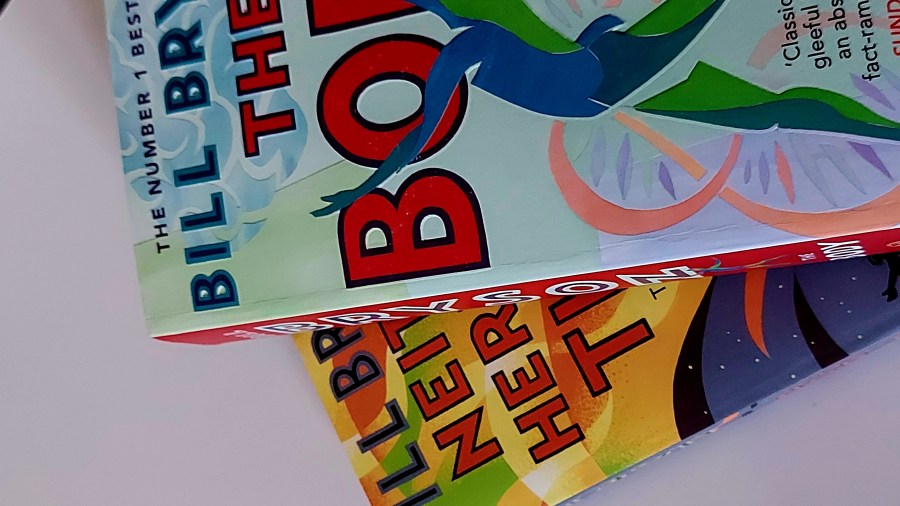
Bill Bryson is a prolific writer and a master of storytelling, and his books “The Body: A Guide for Occupants” and “A Short History of Nearly Everything” are no exceptions. These books are not only informative and educational, but they also provide a glimpse into the fascinating world of discovery and the scientific process. In this blog post, I will explore why it is important to understand the why and how of discoveries and how it makes the world a more interesting place, as well as show some of Brysons comical genius.
Bill Bryson, The Body- A guide for occupants
“There are thousands of things that can kill us—slightly more than eight thousand, according to the International Statistical Classification of Diseases and Related Health Problems compiled by the World Health Organization—and we escape every one of them but one. For most of us, that’s not a bad deal.”
In “The Body: A Guide for Occupants,” Bryson takes us on a journey through the human body, exploring its intricacies and complexities in a way that is both informative and engaging. But what sets this book apart is Bryson’s ability to weave in stories of the scientists and researchers who made these discoveries possible. He goes beyond the surface-level explanations and delves into the fascinating history of the scientific process, from the early days of anatomy to modern-day medical breakthroughs. By doing so, Bryson helps us appreciate not just the discovery but also the immense effort and collaboration that goes into making these discoveries possible.
Similarly, in “A Short History of Nearly Everything,” Bryson explores the history of science and the universe, providing a comprehensive overview of how our understanding of the world around us has evolved over time. But what makes this book so special is Bryson’s emphasis on the human stories behind these discoveries. He goes beyond the scientific facts and figures and delves into the personal lives and struggles of the scientists who made these discoveries. By doing so, Bryson humanizes these discoveries, making them more relatable and inspiring.
“Tune your television to any channel it doesn’t receive and about 1 percent of the dancing static you see is accounted for by this ancient remnant of the Big Bang. The next time you complain that there is nothing on, remember that you can always watch the birth of the universe.”
Bill Bryson, A Short History of Nearly Everything
So why is it important to understand the why and how of discoveries? For one, it helps us appreciate the immense effort and collaboration that goes into making these discoveries possible. It also helps us understand the limitations and biases of scientific research and encourages us to ask questions and think critically about the information presented to us. But perhaps most importantly, understanding the why and how of discoveries makes the world a more interesting place. By learning about the human stories behind these discoveries, we gain a greater appreciation for the incredible accomplishments of scientists and researchers, and we are inspired to pursue our own curiosity and passion for discovery.
“In France, a chemist named Pilatre de Rozier tested the flammability of hydrogen by gulping a mouthful and blowing across an open flame, proving at a stroke that hydrogen is indeed explosively combustible and that eyebrows are not necessarily a permanent feature of one’s face.”
Bill Bryson, A Short History of Nearly Everything
In conclusion, Bill Bryson’s books “The Body: A Guide for Occupants” and “A Short History of Nearly Everything” are not just informative and educational, but they also provide a glimpse into the fascinating world of discovery and the scientific process. By exploring the human stories behind these discoveries, Bryson helps us appreciate not just the discovery but also the immense effort and collaboration that goes into making these discoveries possible. So let us embrace our curiosity and continue to learn and discover
 What I Learn
Vilket intressant ämne! Historia, forskning och lärdomar, det är en bra kombination! Citaten tilltalade mig och gav en ytterligare inblick i hans verk.
LikeLike